Monday, 1 February 2016

VIVACITY INSIDE MASTI GATE

The historic gates of Lahore are the precious inheritance of Lahoris. Though most of the gates have lost their existence with the passage of time and the transitions the city went through but still they are alive to witness the glory and magnificence of the bygone empires. The structure might not be existing now, but the grandeur of the monuments and culture still lives inside the deceased structures of the gates.

Now come to the Masti Gate, one of the thirteen gates of the walled city and this gate too has various traditions about the origin of its name. One says that it is named after a royal guard Masti Baloch who performed his duties with great dedication and commitment. He guarded the gate till his last breath and the gate got connected with his name. According to another, which is more believable, its original name was Masiti Gate (Masit is for a Mosque in Punjabi) which was changed to Masti Gate. The claim is affirmed as a few yards from the gate stands the majestic “Begum Shahi Mosque” which is the oldest Mosque of the Mughal era. The Mosque was built in1611-1614 by the Emperor Jahangir for his mother Mariam Zamani who was the Hindu wife of Mughal Emperor Akbar (Rajkumari Heer Kunwar of Amber, also known as 'Maharani Jodha Bai' in popular culture).  
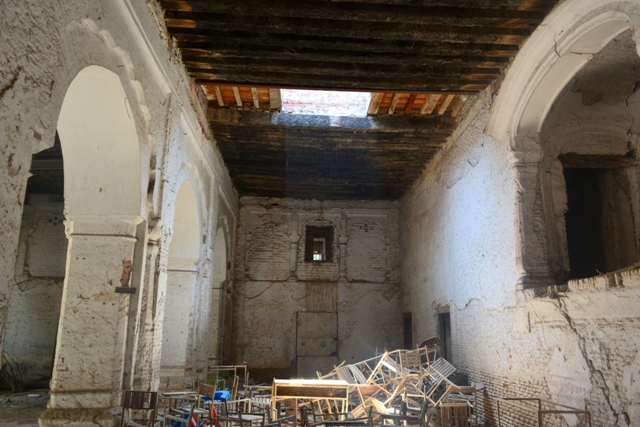
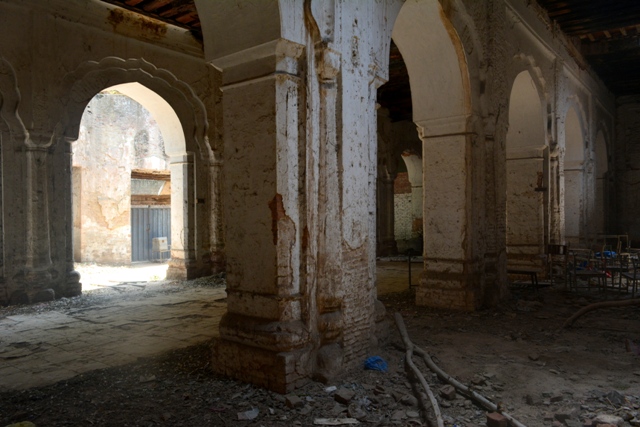
The Masti Gate was destroyed during British period due to its deteriorated conditions and a comparatively small doorway was built. But now there exists neither the gate nor the doorway. A steep path known as Masti Ghatti (slope) goes down to link it with the main road.
Outside the gate we see the vehicles tyre and alloy rims market. The gate is no more there but according to some historians and architects the foundations are traceable inside this market. This market to some extent is also considered an encroachment and has affected the location of the Mariam Zamani Mosque.  Just opposite the Masti Gate and the thick rim market is the grand entrance to the Lahore Fort “Akbari Gate”. This gate was once the main entrance to the Lahore Fort and was built by the Mughal Emperor Akbar.
As we move a little further inside the gate there is the biggest shoe market named Moti Bazaar. This bazaar is a whole sale and a retail market of all types of shoes. It can be claimed as the biggest shoe market in Pakistan.
An interesting thing near the Moti Bazaar is the residential area of the blinds. This is known as the “Aniya di Katri” (Punjabi language). There are more than ten blind families living inside this Katri till now and it is an old settlement. A very narrow path leads you to this katri. Probably you will have to ask someone there if you wish to visit it. Don’t think that the residents of this katri are less hospitable; despite their disability they will host you at their best.
Another remarkable feature inside this gate is the Chunna Mandi Haveli.  Also known as the Havelis of Jamaadar Khushaal Singh and Dhiyan Singh, these Havelis are a significant group of historic buildings in the Walled City. It currently houses the Government Fatima Jinnah College for Women. The building, with its spacious courtyard and Sikh imagery is one of the largest Havelis inside the Walled City of Lahore. From its sprawling courtyards to its royal baths and from its arched hallways to its zenana gardens, the building is breathtakingly beautiful. But, perhaps what is far more important is that the haveli is as alive today as it was in its days of glory. Instead of being kept under lock and key it is being utilized as a college and every corner has been put to constructive use.
Near Chunna Mandi is the Janam Asthan (birth place) of Guru Arjun Raam Das.  He was the fourth of the Ten Gurus of Sikhism and was given the title of Sikh Guru on 30 August 1574. He was Guru for seven years. Ram Das was born in Chunna Mandi, Walled City Lahore on 24 September 1534.
Inside the gate is also the temple converted into a residential area now. It was originally the Mai ka Mandir. A main trail from the Begum Shahi Masjid leads to Chowk Surjan Singh from where you can go towards Rang Mehal Chowk and further to Sonehri Masjid and Wazir Khan Masjid. This is an interesting walk.
Just like Delhi, Lohari, Taxali and Bhatti, the gate is also renowned for its best quality heavy food. At every nook and corner we will find a tea stall and local foods which are no doubt appetizing.  Local drinks like lassi, green tea, kashmiri tea, pathoora, special types of naan and roti are famous food items. There are also functional Akharas (wrestling arena) inside this gate. This is a local wrestling arena which is now hardly seen inside the Walled City. Once these were functional in every gate but now it’s considered a vanishing sport.
Life inside the Walled City and this gate is extraordinarily appealing. If one observes bit deeply, it’s entirely contradictory to that of the modern Lahore. The community is convivial, welcoming, very cooperating and hospitable, if you are passing by a residential area you will surely be offered by a cup of tea or Lassi (a local drink). Even though, atrocious circle of poverty has surrounded them callously but still they are rich at hearts and would offer you whatever they can, that’s the true Lahori culture. The entire Mohalla, Katri or a Koocha is like a family, and everyone is close to each other.  The residents do face issues because of the markets and commercial areas, but they have developed love for their land and place. This is a must visit trail and especially if you visit the awe stunning monuments inside this gate it will be a memorable trip.
(The writer is a media professional and can be reached at taniaq29@gmail.com)


Door to the Times of yore! Lohari Gate

I entered the huge arched door with fruit vendors sitting around, trust me the aroma was awesome.  Even the fruits of the Walled City are different from the ones sold in the greater Lahore. They have a tempting fragrance and look much fresh, may be because of the nearby fruits wholesale markets. I saw some rooms and windows hidden behind the vendors and plenty of posters marketing the local herbal medicines. That was the first sight standing inside Lohari Gate.  Yes, there I was at one of the gateways to the Walled City of Lahore.
This gate was named after the city Lahore. However, according to another school of thought, numerous “Lohars” (Blacksmiths) had their shops just outside the gate, for which the gate became popular as Lohari gate. Some historians and writers are of the view that early in the 11th century, the city was badly affected by the wars between Mahmud of Ghazna and Raja Jai Pal. At one time, it was even unpopulated. When Malik Ayaz was appointed viceroy of North India, he made Lahore, the seat of government. It was at that time, when the people started inhabiting this part and since then the gate was recognized as Lahori Gate. There is also a controversy on the name of the gate, few call it “Lahori” and some say its “Lohari”, because of these myths, well I will take it up as Lohari in my writing, as I have heard it the same way. The marble slab placed on the gate is strange too, and bears both the names, as you can see in the picture, showing the details of reconstruction of the gate in Hindi and English languages.
It is considered to be one of the earliest gates of Lahore. Some books state that initially there were only five entrances to the Walled City and Lohari Gate was one. Historians also record that Lohari area was the original fort built during the rule of Mahmood of Ghazna, and the streets do look like a labyrinth similar to different Forts.  Anyhow, who knows the past unless some strayed soul of those times meets us! By the way, this is something interesting about the Walled City, people do come across strange characters who are actually dead hundreds of years ago, I have experienced that myself but it would be lengthy to elaborate my experiences here, so let’s stick to Lohari Gate.
The gate was initially built during the period of Mughal Emperor Akbar (again a controversy as some say it existed in Malik Ayaz’s times as well. This can only be verified by excavating the foundations, which I think cannot be done).  Mughal Emperor Akbar was the one who had built a fortified wall around the city with thirteen gates, and Lohari was one of the gates. During the Sikh riots the gate got smashed and was rebuilt in British period with small bricks on the same old style. The rooms were built in the upper storey for officials; presently rooms are being used as offices of Walled City Lahore Authority. The gate still has wooden arches. The roof top is spacious with a podium in the center. I guess the roof was used for assembly, but I would suggest that this place can be utilized as an open air theatre now.
There is another interesting fact for you, before the Sikh era, the red light area was located inside the Lohari Gate and most of the rich dancers had built beautiful Havelis there. Chowk Matti was also named after a known dancer “Matti Bai”. With the passage of time, the Red Light area was shifted to Chowk Jhanda, then Tibbi Gali and eventually the Heera Mandi was established. At some places we still find beautiful Havelis which were originally the dancing houses owned by different dancers. One famous Haveli which is now under the use of cobblers is the Noori Haveli. It was also a dancing house of “Noori Bai”.
Near the entrance of this gate, is Muslim Masjid named after a Muslim scholar Mollana Muhammad Bakhsh Muslim. The gem stone market near the same cannot be ignored. From this market you will find a variety of stones or gems you wish for. The biggest optical market of Lahore is also located there.
Currently inside the gate there are innumerable typical Lahori food spots. Haji Sahib Nahari walay, Sheikh Chatkhara and Sweets, Mehar Bashir Halwae and Hafiz Channay are some of the most famous food spots of the area. Lohari Gate itself has a food street, while rambling and wandering around the streets you can taste all types of tempting foods and local drinks like lassi.
The amazing part of my tour to Lohari Gate was that I saw groups and groups of people visiting the place to enjoy the food and witness the relics of history. Neevin Masjid, Chowk Bukhari, Chowk Jhanda, metal workers market and the famous Lal Haveli Square are a must see there. A Haveli has been adopted by the National College of Arts as Conservation Bethak. Regular classes of conservation and restoration techniques are held there. Amidst the narrow streets and shops there is Hindu temple as well, though it is not a functional one, but it is well intact. Unfortunately it is not a tourist site as it is locked like most of our mosques, but I wish it is developed as a tourist site. 
Lohari Gate is the best example of the living cultural and heritage. I hope it does not get into the shackles of commercialization like many other parts of the Walled City, although much has been take over by commercialization now. I suggest a plan to be devised for saving the roots of the heritage.


(The writer is a media professional and can be reached at taniaq29@gmail.com)


IMPERIAL MINDSET AND SOCIAL MEDIA - LEARN TO PUT YOUR DEMANDS

Here comes the French Mayor Robert Chardon: “We Must Ban the Muslim Faith in France”, calling for governmental legislation that will ban Islam.  He also stated in one of his very recent statements that, “It’s the only solution for most of France’s problems,” and, “We also need a Marshall Plan to send Muslims to countries where the religion is practiced.” This man is the mayor of Venelles, a French town with a population of about 8,000 people, and according to the news reports and media he is more righteous than any of the politicians in Paris.
Here we go, French flag being projected on most of the profile pictures on social media as the face book makes a French flag display picture filter. The dilemma is not of the display picture (DP) filter, it is with the mindset of our youth who are changing their DPs without knowing anything. Who are the forces controlling the minds of our youth and what is being injected in the brains? I think the issue again rests with our media. Let’s put this question to ourselves, are we inculcating the right thoughts among our youth? Wake up my dear Pakistanis and especially the youth infected by the social media. Being a true Muslim, after reading my opening lines think for a while about the dire need to stand united and campaign on social media for the rights of the other innocent souls.
Has any group from Pakistan questioned Face book about why they never created a Palestinian, Pakistani, Lebanon, Yemen, Burma, Africa, Syrian, Iraqi, Afghan or any other country’s flag filter where hundreds die each month and are bombarded on daily basis? Who raised voice to create a Pakistani flag filter after 16th December Army Public School attacks in Peshawar? Was there anything brutal than that incident where hundreds of children were ruthlessly tortured, killed and the teachers burnt alive? 
Be it a Muslim or a non Muslim, all souls are precious! No soul deserves a death of terror! I condemn Paris attack on humanitarian grounds, and each of us should too, but not at the cost of discrimination. Pakistan has been standing up to take the war against terrorism and Zarb-e-Azab is the living example in which thousands of army officers have given away their lives.
Muslims have been killed brutally in Bangladesh, Egypt, Palestine, India and many other countries, but the extreme hypocrisy of western imperial mindset never raised any voice for this, nor did the social media. Many of the news are not even taken up by the social media. Why this "Selective" Humanity and Imperialistic mindset? And my dear youth, I am asking you why you are following it? This actually shows our devotion for nationalism, level of awareness, understanding of issues and polluted mindset. Are we going in the right direction? You should question yourself, if there were any Americans, British or French who changed their profiles to condole whatever is going on in these countries? Ask them that how many of them supported and showed outrage of ISIS terror attacks on these countries by changing their profile pictures to the flags of these countries.
Dear youth, it’s not my argument about changing the profile pictures, I am requesting you all to show your care for human life other than that of Paris too. Do these innocent souls not deserve recognition or humanitarian support like Paris?! Why are their brutal deaths not highlighted or given outrage?! Why are you sleeping at other incidents?
Let me answer as well for the youth, your minds are polluted by the media projection. You all need to assess for yourself and understand what is right and wrong. Condemn the attacks, where ever they happen, raise your voice on social media platforms, give all the attacks and brutalities an equal response. You have responded to what the social media demanded, but learn to put your demands too. Speak for your country and other souls who depart unnoticed crying for someone to stand up for them. Try to make best use of these media tools rather than following a trend. I ask you to be a trend setter not a trend follower. Take up a stand for once and make the world follow you. This is the age of e-media and most decisions are subsequent to what is highlighted by it, then why not to stand by all the innocent lives and incidents that take place. I do not suggest to be prejudice but think for a while who are building your opinions and then try to be an opinion builder.
Terrorism is condemned everywhere, not just where social media chooses to report and our youth following it blindly. Try to bring humanity together for all innocent lives not just the ones the social media chooses.
(The writer is a media professional and can be reached at taniaq29@gmail.com)


Foundations of Oriental & Government College HAVELI DHIYAN SINGH

We ramble around the historic streets, enjoy the local eateries of the Walled City but hardly know the importance of the place we are visiting at that very moment. Each brick, balcony, street, shop, bazaar, shrine, mosque, haveli and everything we traverse clasps the historic impressions of the past. The commotions and the splendors of the times gone are shimmering in the relics of Androon Lahore. That’s my city of marvels and I am proud of it!
I stood inside the Haveli of Dhiyan Singh with Samina and Asgar ( my colleagues) photographing the area but trust me I was oblivious of the historic significance of the place, till a security guard came and asked if we were done with our pictures. My colleagues asked the guard about the history of the place, and to our surprise the story was stupefying. The place we were standing at was the first classroom of Oriental College and Government College of Lahore. The facts were afar our belief. The preliminary classes of Government College and the Oriental College started in that building in 1864. The Haveli had sixty two rooms originally. At that time the Haveli covered an area of 47 kanals but it reduced to 2 kanals after encroachments and division of land, maybe after 1947. It is also mentioned in the book “Lahore ka Chelsea” that many professors of Oriental and Government Colleges resided inside Bhatti Gate as it was close to the location of Haveli Dhiyan Singh. This was the reason that settlement of teachers and literary people started in Bhatti Gate.
The haveli was turned it into a school by the British, in 1854, and after a decade in 1864 the Government College and Oriental College Lahore abode there. After the shifting of the colleges, the Haveli was turned into a boys school “Dhiyan Singh School” which, after partition, was renamed to City Muslim League High School, a broken board was also spotted in the main chamber of the Haveli. Till 2004 the Haveli was used as a boys’ school, but due to the decaying of the building it was declared unfit for the children and thus the school was shifted to a nearby locality. The Haveli was abandoned at last!
Digging more into the history, we got to know that it was the haveli of Raja Dhiyan Singh a Sikh courtier who was born in 1796 and served Maharaja Ranjit Singh. According to Sikh history, Raja Dhiyan Sigh was one of the successful courtiers who gained various positions in the Sikh court because of his intelligence and astuteness. Later, Raja Dhiyan Singh became the prime minister of the court and died in 1843.
The place we were standing at was the public court of Raja Dhiyan Singh while the other portions of the Haveli had been demolished and in one portion a family is still residing. The balcony for public hearing was still seen in the main hall. The small openings in the floor endorsed the presence of a basement which was locked. The guard said that it was dangerous to go down as it has not been cleaned up since ages. The main door leading to the basement was covered with cobwebs and the staircase was sealed. The basement was probably the private chamber of Raja Dhiyan Singh.  It is mentioned in different books that this Haveli was more spacious than the Haveli of Khush`haal Singh and Jamadaar Singh which is today known as Chinna Mandi College. 
A mixture of Mughal and Sikh Architecture is obvious from the arches and built of the Haveli. It is said to be built during the Mughal era and later on after the fall of Mughal Empire the Haveli was taken over by the Sikhs. The lotus flower petals on the pillars of the main hall and the Jharoka or balcony made for public hearing resemble the architecture of Lahore Fort and other buildings of that era.
Remains of old fresco work on some pillars and portions on walls are still seen, though much of it has vanished because of aging and negligence. The Haveli is in a critical situation, with no one to clean or look after it. It does not house any institute but has given shelter to many pigeons, cats and dogs. The traces of green plantation, though wild growth, does give a sign of hope for its restoration.
For my readers; the Haveli is located inside Taxali gate, near the shrine of Shrine of Peer Nougaza in a street leading to Said Meetha Bazaar. One can see a sign of Haveli Dhiyan Singh at the entrance of the street.
If I talk about my ideas, it should be conserved and restarting a school might be a good idea. It can also be turned into a small museum or an arts and crafts learning center. Let’s see what future holds for this piece of heritage!
(The writer is a media professional. She can be reached at taniaq29@gmail.com)


Delhi Gate – A Must see Heritage


My love for Lahore has always driven me to unknown routes in search of more and more of ancient remains. Almost fifteen years ago, I visited Delhi Gate Lahore for the first time with my brother, who then had started architectural photography as a hobby. I was awe stunned at the grandness of the gate at first glance and thought as if I am into another city, and yes I was. It was then when I wrote my first feature in a newspaper on walled city. That was the inspiration I took from my first trip to Delhi Gate.
You can reach Delhi gate via Railway station Lahore, crossing the old Do Moria Bridge (a bridge with two tunnels like openings) and taking a left turn, now the signages are there for fortunate tourists. The majestic gate is the welcome sign to the city of wonders, the walled city which has an aura found nowhere in the world. This is my remark after visiting more than ten heritage sites of the world.
This gate is one of the thirteen gates of Lahore. The gates around the city of Lahore were built by the third Mughal Emperor Akbar in mid 1600s. These thirteen gates provided access to the city of Lahore which was once enclosed within a thirty feet high fortified wall, built by the same Mughal emperor. The wall is no more today, but still I can visualize the grandeur and you too can feel it, only if you visit the Old City. 
Delhi Gate, situated on the east of Walled City was named so because it faces towards Delhi, which was the capital of the Mughal Empire. During the Mughal era, and even some time later, this gate remained the main entrance to the city of Lahore. The royal entourages and the common people used this gate which leads into the city. All the gates of the Walled City of Lahore were demolished during the British era. A circular road and circular garden, which still exist today, was built after the grand demolition. Other facts affirm that the bricks of the wall were used in constructing the Railway Station of Lahore by Mian Sultan a contractor of British era. Somehow, only the gates were reconstructed in early 1900’s by the British.
Like many other monuments and buildings inside the walled city Delhi Gate witnessed seasons of harmony, serenity and commotion. Once it enjoyed the status of the reception gate to the Royal City with the soldiers and guards welcoming people, later in the Sikh British rule it functioned as the court of a magistrate, jails, and local police station.  As per history books the gate had wooden doors similar to the ones fixed in Lohari Gate. The doors were probably destroyed during the independence riots. During the Mughal era, the doors in these gates were closed after sunset when the city would go to sleep, thus disallowing access into the city. After partition a girl’s school was housed inside the gate building which is still there. The recent Governments have tried to relocate the school but all efforts failed. The locals of the area also use the upper storey of the gate for marriages and religious ceremonies. I wish the gate was a museum or a cultural center!
The building of the gate is double storey and almost ten to twelve rooms are serving as class rooms. The most interesting part of the building is the staircase leading to the roof top of the gate. The stair cases in most of the huge mansions and monuments were made at 90 degree angle in order to protect the building from sudden attacks. While going up the stairs, one looses the momentum and speed to climb. This shows the cleverness and techniques of defense in those days. Going to the upper storey one can see the roof of the Royal Bath “Shahi Hammam” on the right side. The roof of the gate is even, which gives a marvelous view of the old city and Delhi Gate’s vibrant bazaar. In history books we find that once the Wazir Khan Mosque could be seen from the roof top of the gate. Next to the gate was once the “Sarai” (guest house) of Wazir Khan which was demolished during a flood that struck the city during the Sikh era. After which the streets were made and the locals started settling there.
The ground floor of the gate which is the entrance into the Delhi Gate bazaar has six rooms which are now converted into tourism offices and crafts center. These rooms were used by the chobdars in Mughal era, magistrate and police in later eras. For some time after 1947, the rooms served as dispensary and health centers for the local community.
Outside Delhi Gate we see many tea, spices and grains shops, these are actually the part of Akbari Mandi, the Spice Market.  Akbari Mandi was named after Mughal emperor Akbar.
This is a nice tourist spot; the gate is illuminated at night for the tourists and tourists Tongas are found there conducting guided tours. It’s a must visit place. Local vendors selling interesting traditional items like bangles, shoes, toys and cloth are also located there. One best stall is the local enticing food “Ladoo Peethi Walay”. They seller opens the shop at sunset and remains there for a few hours only. I guess these are the best in the town. You will find the Afghani Pulao as well near Delhi Gate. This is available now because of the Afghans settlement in old Lahore.
This is our culture and unfortunately many of us are unaware of it. Trust me it’s a must visit site!
 (The writer is a media professional and can be reached at taniaq29@gmail.com)


AKBARI GATE’S TWINING STREETS!

 Akbari Gate of the Walled City was named after the Mughal King Jalal-ud-Din Muhammad Akbar who was the third Mughal Emperor. Akbar came to Lahore in 1600s when he rebuilt the mud Fort of Lahore with burnt bricks, added a thirty feet high wall around the city and made thirteen gates. This gate and the food grain market inside both are named after Akbar as they were established in the same period. Aging to Akbar’s period Akbari Mandi holds historic importance.
Like other gates of the walled city, the original Mughal era gate was demolished and during British Raj, it was reconstructed. Unfortunately, after the war of independence, the gate was completely destroyed and only the tavern (inn) attached to it was left. The walls of the tavern were attached with the gate but there is no sign of the gate now. However, the Akbari Gate police station is housed in the old building of the inn.
Don’t confuse this gate with the Akbari Gate of Lahore Fort; this is one of the thirteen gates of the walled city. This gate is between Delhi gate and Mochi gate lying on the eastern side of the old Lahore city. It is one of the busiest market places in Lahore. The reason is the famous Akbari Mandi outside and inside the gate. A long trail of Akbari Mandi (market) is seen as you enter the gate. Actually Akbari Mandi was the place where the British East India Company rooted from through the trading of spices and grains.  This region of subcontinent in those times was famous for the flavorsome spices and assorted grains. The British had requested the Emperor Akbar to let the British trade spices from there to different parts of the then Britain. Reading the minds of the British, the intelligent courtiers and advisors of Akbar declined the offer and thought to trade it themselves.  Since then the British were trying hard to enter into the great empire built by the Mughals but it took a lot of time for them to pave their way into it.  This is the biggest spice market in Asia till now, and you can understand the historic importance of it. There are shops of all kinds of food grains like wheat, rice, lentils, jams, marmalade, and herbs of all kinds. Different modes of transportation are operational here, the old ones and the new ones. There are horse, mule, and donkey driven carts seen inside the Akbari Gate. This is the only place where you would find every kind of item used in Asian cooking, but easy access is not much possible due to heavy traffic jams and congestions. Outside the gate is also the wool market.
This gate is interestingly linked with several places. As you keep going on the main Akbari Gate trail, you will come across Bazaar Nohriyan as you take a right from there you pass the Kharadi Mohallaha, Haveli Shamsher Singh, Sheeda Halwai Wali Gali and this route will directly take you to Chitta Gate near Pir Said Suf Shrine from there you can also see the majestic Wazir Khan Mosque just a few feet ahead. This is an interesting route with shops and stalls of different eatable items.
Now coming back to Bazaar Nohriyan, let me take you to another fascinating trail. From Bazaar Nohriyan you can also take a left turn from where you will go to Chowk Nawab Sahib. Chowk Nawab Sahib named after the Nawab Ali Raza Qazalbash who was an aristocrat of Punjab. Nawab Ali Raza Qazalbash was a native of Iran and would often reside in Mubarak Haveli. For the same reason this Chowk became popular as Chowk Nawab Sahib. From this Chowk, you can go straight to the Mochi gate streets where you will see the Mubarak Haveli, Nisar Haveli and Mohalla Shian.
Towards the right of the Chowk Nawab Shah, is the Lakar Mandi from where, through Chohatta Mufti Bakar, you can easily reach Wazir Khan Mosque and Mohallah Kakayzayian. From Chohatta Mufti Bakar you can take a route to Sonehri Masjid via Siriyon wala bazaar and Kasera Bazaar. This route is full of historic monuments and colorful bazaars which are no doubt mesmerizing.
This gate and the trail is culturally rich as it links up the monuments, havelis and bazaars located inside the Delhi Gate and the Mochi Gate through very twisting narrow streets. You will have to be with a local of the area if you desire to wander around, as the maze like trails will easily confuse you, but it’s a must see. The walking distance from Akbari Gate to monuments and Havelis is quite less if you are assisted by a local resident or a tourist guide. The locals of the area are welcoming and would love to offer you a cup of tea in this cold season. The shopkeepers are remarkably hospitable and would offer you dry fruits when you enter the shops. Hospitality and generosity is at its peak inside the walled city of Lahore, which is hard to find in any other part of greater Lahore now. The only thing that is obstructing the view is the ugly hanging wires in front of the heritage buildings. I wish these are also taken underground as done inside Delhi Gate. Do visit this site, but remember you need a guide!

(The writer is a media professional and can be reached at taniaq29@gmail.com) 

Wake Up Call!

We are a nation which is developing a queasy and a harsh insensitive mindset and the credit goes to our media. What are we showcasing? Terrorism, bomb blasts, rape cases, dacoits, people committing suicides because of inflation, students running away, child marriages, incest, physical abuse, wars against terrors, nuisance of politicians, off track debates on religious issues and making them more complicated, across border talk shows and films? We are a nation who has no reverence for the national and religious days like 14th Augusts or Eids.  Our TV Channels prefer airing Indian films, the drama channels are swollen with pride to broadcast Indian dramas, the cartoons our children watch are dubbed in Hindi Language! Where are we heading?
Has any media think tank, or let’s talk about PEMRA, comprehended the impacts of this content? Are we going towards a healthy future? Are we nurturing our national language and values? I need an answer from all the media titans about what is the course of action for inculcating nationalism among the people of Pakistan?
At home, where i spend almost ten hours of the day, after my work, I hardly want to turn on the TV. If I do, out of my boredom, I find people being killed, riots, below par politics, and all I have mentioned in the beginning. My children, and of course our children, are more fluent in Hindi language than Urdu. The cartoons and other content shown on TV Channels (for children) are grooming our generation negatively. We are teaching them that dating at any age is risk-free, western dressing is our culture, parents are a pain in neck and what not!
Now come to another episode, the programs like CID are teaching our youth innovative ideas of crime and murders! Has anyone thought where this would escort us? Not the least is the quandary of the dramas shown on different drama channels! The projection of other religions and nationalism, the charisma of having extra marital affairs, the family politics etc. is no doubt leading us to develop an ailing mindset.
My question is who is assessing the media content and policy? Let me explain this to all my media friends, we are destroying our culture, language, nationalism and everything we have. Moreover, we are persistently portraying Pakistan as a terrorist country, where everything happening is troublesome and people should either leave the country or invest in foreign assets.
Don’t we have anything positive to show?
Where is the programming like Tanhaiyan, 50 50 , Alif Noon, Waris,  Taleem-e-Balighan , Khuda ki Basti, Ankahi , Dhoop Kinarey,  Alpha Bravo Charlie, Ainak Wala Jin and kaliyan for kids, etc? Till 1999 we see a decent programming which educated people on their day to day issues, instilled nationalism and endorsed the culture of Pakistan. But what is it now?
Name any channel whose fixed point chart (the transmission chart) has dedicated even a half hour slot to tourism, entertainment and soft side of Pakistan? Why cannot we have road shows, documentaries on heritage, any programming to promote the events being held like theatre, Film Festivals, Jashn-e-Baharan, Tourism activities etc? Why can’t we project our own values? Are we ashamed of being Pakistani? I am not talking about religion, I am focusing on Pakistan. Why can’t we show the inter faith harmony, the celebrations in Gurwaras, Churches, Shrines, Mosques, Temples etc? Why don’t we show the beauty of Karachi? Why just killing and deadly fights among political parties? Why is Islamabad limited to parliament, Supreme Court and Protests? Why is Lahore not promoted as the largest living cultural hub? Why is Thar limited to the water scarcity, why are the deserts not promoted as a tourist site? Why Balochistan and Khayber Pakhunkhwa are declared the zones of terrorism and tribal enmity? Why don’t we project the natural assets and beauty of these areas?
Pakistan is enriched with cultural heritage, natural resources, sites, sports, theatre, performing arts, literature and intangible culture. Why cannot these places and events be highlighted in the programming? I am thankful to the news packages and reportages in which at least two minutes are often given to showcase the lighter moods of Pakistan, but trust me that’s not enough. Every country in the world from USA to India and other under developed countries, all have issues like unemployment, crimes, robberies, political and economic instabilities but they always highlight the positive aspects of their country. Why can’t we as media professionals do all this?
Here I have a request to all media authorities to please look upon redesigning your content policy. Think what we are showing to our children, students, and nation as a whole. Let’s make this a nation full of nationalism and not a nation of astrayed thoughts and criminal minds.
PEMRA please wake up!
(The writer is a media professional and can be contacted at taniaq29@gmail.com)